
Velocity guide
Free Fire Proxy Server Guide: Choosing the Route That Fits Your Game
A buyer's-guide style tour of the proxy idea for Free Fire players: who benefits most, who does not, and how to test honestly before committing.
 By Danu Prasetyo · Mobile Network and Battle Royale Reviewer
CONTENTS On this page
Not every player needs a VIP Proxy Server route, and pretending otherwise helps nobody. This guide is the honest tour behind Proxy Server Free Fire: the profiles that gain the most, the profiles that gain nothing, and the test that tells you which one you are.
Who gains the most
The clearest winners are players with a decent connection and a miserable path: strong signal, modern phone, and still a ping that swings at peak hour or auto-backs that arrive without a signal excuse. For that profile, the default route is the broken layer, and a chosen VIP Proxy Server route is aimed at exactly that layer. Squad players gain together, because one steady route per player removes the weakest-link kicks that end team sessions early; our squad sessions guide covers the team side.
Who gains the least
If your signal sits at one bar, no route rescues the first hop, and money and hope are better spent on router placement or a better spot in the house. If your phone drops frames in fights, the fault is rendering, and settings work beats route work. And if your connection is already flat and low at every hour, congratulations: your default path is one of the good ones, and a Free Fire Proxy Server build will feel like a solution shopping for a problem. If the test says the route is not your problem, believe it and fix the layer that is; the most useful thing a VIP Proxy Server guide can give a player with a signal problem is honesty, and the most useful thing it gives a VIP Proxy Server candidate is a method.
The honest test
Record three evenings of baseline numbers on your current setup first: lobby, landing and final circle, at your usual playing hour. Then run the same three evenings on the new route and compare evenings, not matches. Single matches lie in both directions; a week of evenings tells the truth in either direction too, and a truthful "no difference" is a result worth having before ranked points ride on it.
Reading the results
Look at stability before speed. A route that holds one number through fights beats a route that flashes a lower number between spikes, because Free Fire fights are decided in the seconds the spike would have chosen. Check auto-back counts across the week as a second scoreboard. Our explainer on how the route works gives the vocabulary; this guide gives the method.
Questions to ask before you commit an evening
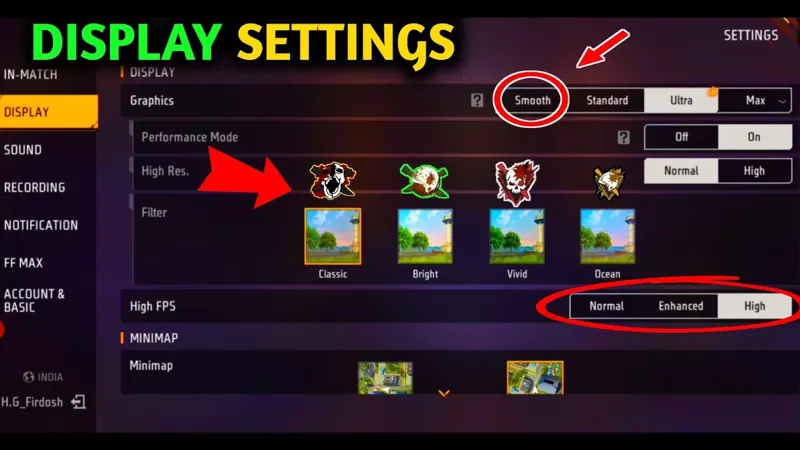
Three questions predict most of the outcome before you install anything. Is your signal strong where you actually sit to play, not just somewhere in the house? Do your worst matches cluster at predictable hours, the signature of crowding rather than hardware? And does your phone hold its frame rate in a busy training-ground fight, proving the rendering layer is not the real complaint? Two yes answers make you the profile this VIP Proxy Server build serves best. The third question failing sends you to the settings guide first, which is not a rejection; it is the correct order of operations wearing a guide's clothes.
The commitment question
The build asks for one install and ordinary play. There is no subscription to the idea beyond your own verdict, which is how connection tools should work: measure, compare, and keep the setup that survives your evenings rather than somebody else's highlight reel.
Quick Answers
How do I know if my problem is the route or the signal?
Strong signal bars with swinging ping at peak hour points at the route. Weak signal with problems at all hours points at the signal. The three-evening test in this guide settles it.
Does the whole squad need the VIP Proxy Server build?
No, each player's route is their own. Squads benefit most when the players with the worst default paths fix theirs.
Is one good match enough proof?
No. Compare evenings, not matches. Crowds, hours and heat all move single-match numbers around.